Why does your commercial pool keep losing water?
When a commercial pool loses water day after day, the first instinct is to refill and move on. But a pool that drops below its normal water level every few days is not just an inconvenience. It signals something wrong in the circulation system, the plumbing network, or the shell itself. For facility managers and property owners, the real question is not how much water is gone but what is causing it to leave. A measured, deliberate testing process is the only way to separate a normal evaporation cycle from a leak that will get worse over time.
Why guessing at water loss costs more than you think
A public pool or a hotel pool runs on a schedule. The water level has to stay within a certain range for the skimmers to work and for the circulation system to function correctly. When the level drops, the pump can pull air, the heater can shut down on a dry-fire sensor, and the chemical balance can drift. The usual response is to turn on the hose and bring the level back up. That works for a day or two, but it treats the symptom, not the cause.
The operating costs of a commercial pool are already significant. Adding hundreds or thousands of gallons of make-up water every month inflates the utility bill, increases chemical usage, and puts extra strain on the filtration equipment. Over a season, that water loss can equal the volume of the pool itself. The only way to stop the waste is to find out where the water is going, and that requires a process that is careful, repeatable, and free of assumptions.
The difference between evaporation and a leak
Every pool loses water to evaporation. Hot weather, low humidity, wind, and heavy bather load all increase the rate. But evaporation follows a predictable pattern. A bucket test, done correctly, can tell you whether your water loss is normal or excessive. Fill a five-gallon bucket with pool water to within an inch of the rim. Place it on the top step of the pool or on a flat surface in the water so the water inside the bucket is at the same level as the pool water. Mark the water level inside the bucket and mark the pool water level on the tile or the skimmer face. Run the pump on its normal cycle for twenty-four hours. Then compare the two levels. If the pool lost significantly more water than the bucket, you have a leak. If the two losses are close, evaporation is the main culprit.
That test is simple, but it must be done under consistent conditions. Wind, rain, and bather use can throw off the results. Repeating the test over several days gives a more reliable picture. A single measurement is not enough.

Where commercial pool leaks hide
Commercial pools have more points of failure than a residential pool. The plumbing network is larger, with multiple return lines, suction lines, and dedicated lines for features like spa jets, water features, or pool cleaners. The shell itself may have cracks, and the tile line can develop gaps where water seeps through. Leaks also occur in the equipment pad: pump seals, heater heat exchangers, filter valves, and the plumbing fittings that connect them all.
A leak in the main drain or a crack in the shell can lose a lot of water quickly. But many leaks are slow and intermittent. A seal that drips only when the pump is running, or a crack that opens slightly when the ground shifts, can be hard to spot without a systematic approach. That is where specialized testing for commercial pool leaks becomes essential. A methodical test isolates each part of the system and measures pressure loss or water loss under controlled conditions.
The role of the water meter in leak detection
One of the most effective tools for finding a leak is the water meter that supplies the pool. If the pool has a dedicated make-up line, the meter can show exactly how much water is being added over time. Turn off the auto-fill if there is one, and record the meter reading at the same time each day. A steady increase in daily consumption points to a leak, especially if the weather and bather load have not changed. The meter does not lie, and it gives you a hard number to work with.
For pools without a dedicated meter, you can install a temporary meter on the fill line, or use the bucket test combined with a pump-off test. The pump-off test is simple: turn off the circulation pump for twelve to twenty-four hours and measure the water loss. If the pool loses water with the pump off, the leak is in the shell, the main drain line, or the tile line. If the pool holds steady with the pump off but loses water when the pump runs, the leak is in the pressure side of the plumbing or in the equipment pad.
Pressure testing the plumbing network
Once you know which side of the system is leaking, the next step is to isolate individual lines. A pressure test uses air or water to pressurize a section of pipe and measure whether it holds. For a commercial pool with many return and suction lines, each line must be tested separately. The process involves plugging the line at the pool wall or the equipment pad, attaching a pressure gauge and a pump, and bringing the line up to a known pressure. If the pressure drops over a set period, that line has a leak.
Pressure testing requires care. Too much pressure can damage old pipes or fittings, and air testing can be dangerous if not done with proper regulators. A qualified technician knows the safe pressure range for the pipe material and the age of the system. The goal is not to force the pipe to fail but to measure its integrity under normal operating conditions.

Inspecting the shell and the tile line
A crack in the gunite or a gap in the tile grout can lose a surprising amount of water. The leak may be below the water line, where it is not visible. A dye test is a common first step. With the pump off and the water still, a technician injects a small amount of concentrated dye near a suspected crack or joint. If the dye is pulled into the crack, the leak is confirmed. For larger areas, a listening device or a ground microphone can detect the sound of water escaping into the soil or the deck.
The tile line is a frequent source of leaks in commercial pools. The expansion and contraction of the deck and the pool shell can crack the grout or the caulking at the water line. Water seeps through, and over time it can erode the bond beam or create a void behind the tile. A careful inspection of the tile line, including the area just above and below the water level, should be part of any routine maintenance check.
Why a single inspection is not enough
One test rarely tells the whole story. A leak may be intermittent, appearing only when the pump cycles on or when the water temperature changes. The ground around the pool can shift, opening a crack that was not there a month ago. For a facility manager responsible for a public pool or a hotel pool, the best approach is to establish a baseline. Record the water level at the same time each day, note the weather and bather load, and keep a log. If the water loss increases over several weeks, it is time to bring in someone who can perform specialized testing for commercial pool leaks.
A single inspection record is useful, but a series of records over time reveals the pattern. That pattern tells the technician where to focus the search and what kind of test to use. It also helps the facility manager decide whether the leak needs immediate attention or can be scheduled for the next maintenance window.
The cost of waiting
Water that leaves the pool through a leak does not just vanish. It goes into the soil under the deck or the pool shell. Over time, that water can erode the ground, create voids, and undermine the structure. A small crack that loses a few gallons a day can become a major repair if left for a season. The same is true for a leak in the plumbing. Water that escapes from a return line under the deck can wash out the soil and cause the deck to settle or crack.
Waiting also increases the operating costs. Every gallon of make-up water has to be heated, filtered, and treated with chemicals. A pool that is losing water is also losing heat and chemicals, which means the heater and the chemical feeder run longer and work harder. The equipment wears out faster, and the utility bills climb.
Making the test count
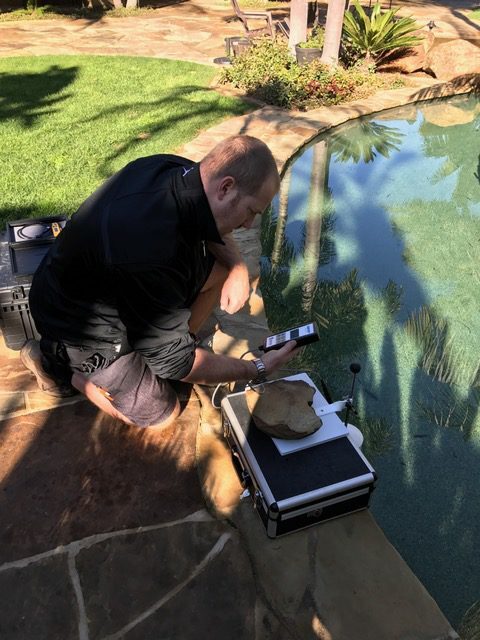
A measured testing process is not complicated, but it does require patience and attention to detail. The bucket test, the pump-off test, the pressure test, and the dye test each give a piece of the puzzle. Used together, they can pinpoint the leak without digging up the entire deck or draining the pool. For a commercial pool, where downtime means lost revenue and unhappy guests, the ability to find and fix a leak quickly is worth the effort.
The key is to treat water loss as a data point, not a nuisance. Measure it, record it, and compare it over time. When the numbers say something is wrong, act on them. A systematic approach to leak detection saves water, money, and the structure of the pool itself.